
Neuroma in the Foot (Morton's Neuroma)
Understand what's causing your pain and learn about effective treatment options.
A neuroma in the foot can cause sharp, burning pain and a sensation of walking on a pebble. It often develops gradually and can make everyday activities uncomfortable if left untreated.
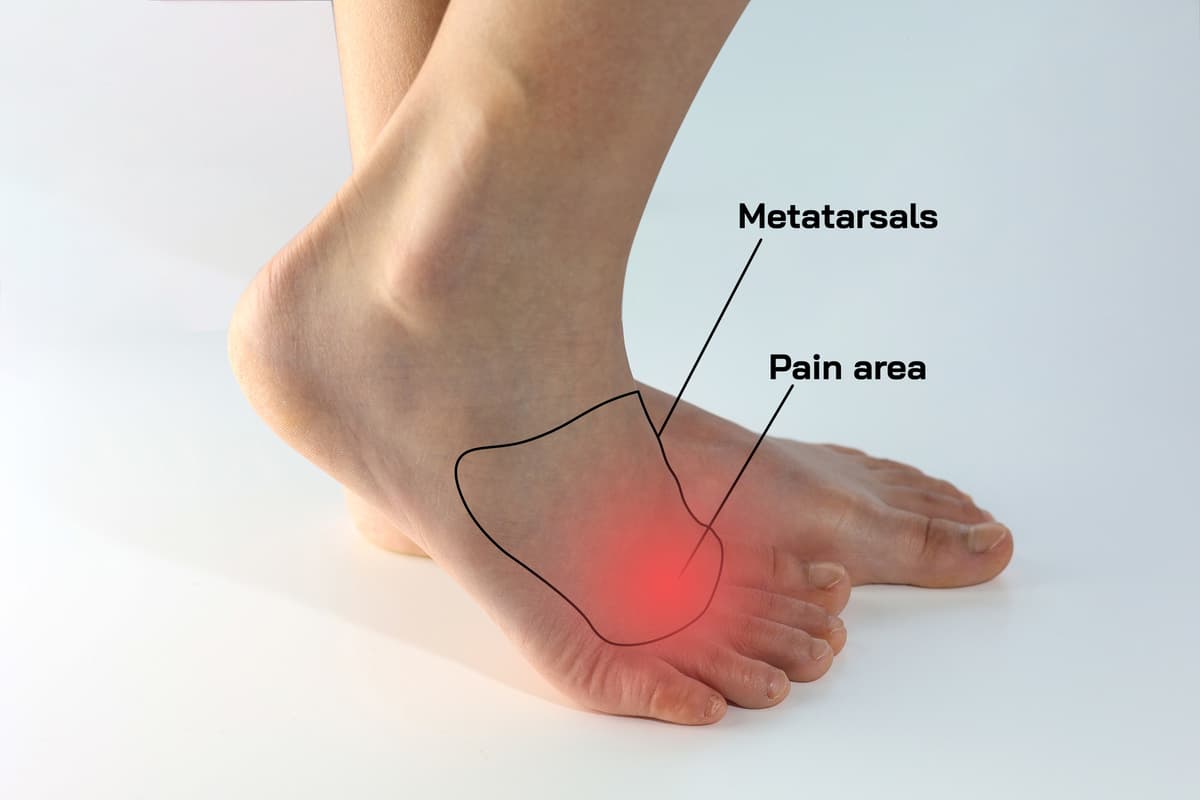
The most common type is Morton's neuroma, which affects the nerves between the toes—usually between the third and fourth toes.
What is a neuroma?
A neuroma is a thickening of nerve tissue caused by irritation or compression. Over time, this leads to inflammation and pain.
In the foot, this typically occurs due to repeated pressure or biomechanical issues.
Common symptoms of a neuroma
Burning or sharp pain in the ball of the foot
The most common symptom that worsens with activity.
Tingling or numbness in the toes
Often felt in the third and fourth toes.
Feeling like something is inside your shoe
A sensation of walking on a pebble or marble.
Pain worsens with tight footwear
Symptoms escalate when wearing narrow or restrictive shoes.
Note: Symptoms may come and go at first but usually become more persistent over time.
What causes a neuroma?
Neuromas are often caused by:
- Tight or narrow footwear
- High heels
- Repetitive stress (walking, running)
- Foot structure or biomechanics
How is a neuroma diagnosed?
A specialist will:
Assess your symptoms
Examine your foot
Apply pressure to identify the affected nerve
In some cases, imaging may be used to confirm the diagnosis.
Treatment options
Conservative treatment
- Footwear changes
- Padding or orthotics
- Activity modification
Targeted treatments
- Anti-inflammatory care
- Injection therapy (if needed)
Surgical options
- Minor surgery for severe or persistent cases
When should you seek treatment?
You should get assessed if:
Pain is persistent or worsening despite rest
You experience numbness or tingling that spreads
It's affecting your ability to walk comfortably
Symptoms are making everyday activities difficult
Early treatment can make a significant difference. Getting a proper diagnosis and starting treatment early often leads to better outcomes.
Can a neuroma go away on its own?
In early stages, symptoms may improve with simple changes like wearing properly fitted shoes and modifying your activities.
However, untreated neuromas often become more painful over time. Professional assessment and treatment can prevent the condition from worsening.
How we can help
Accurate diagnosis
We identify the exact location and severity of your neuroma through thorough examination.
Personalised treatment plan
We create a treatment strategy tailored to your specific condition, lifestyle, and goals.
Long-term relief
Our goal is to eliminate your symptoms and prevent the neuroma from returning.
Related foot conditions
If you're experiencing other foot issues, explore these related guides:
Treatment Resources
While neuroma treatment is specialized, our team uses approaches similar to those for other foot conditions. Explore our treatment pages for more information about comprehensive foot care:
Professional Foot Treatment
Learn about our comprehensive approach to diagnosing and treating foot conditions.
Learn more →Specialized Treatment Options
Explore treatment strategies for complex foot conditions requiring professional intervention.
Learn more →General Foot Pain Resources
Comprehensive information about foot pain causes and available treatment options.
Learn more →Get relief from neuroma pain
If you're experiencing symptoms of a neuroma, early treatment can make a significant difference. Book a consultation to get a clear diagnosis and personalised treatment plan.
Book your consultationOur specialists will assess your neuroma and discuss the best treatment options for your situation.